

Quick Summary
YouTube works for B2B SaaS and service businesses when you measure leads instead of views. With an existing audience on LinkedIn or email, leads can show up in two to six weeks. Starting from zero, expect two to four months. The question to answer first is whether your buyers already search for answers on the platform.
YouTube Already Works for B2B, and the Proof Isn’t in the Views
Taylor Haren generated $28,000 in pipeline in the first 28 days of his YouTube channel. He wasn’t going viral. The scripts came from LinkedIn content he’d already written, the packaging got the clicks, and the right people found him.
That’s the pattern we see across B2B companies, including SaaS and service businesses like agencies and consultancies. YouTube is a search engine where your buyers are already looking for answers, and long-form video builds more trust than any blog post or carousel.
Why Listen to Us
We’ve helped 40+ B2B companies build YouTube channels that generate pipeline and leads. We helped Dave Gerhardt and the team at Exit Five level up their YouTube strategy. As he put it, “Samu and KS Media definitely know their stuff when it comes to YouTube. They helped level up our YouTube strategy at Exit Five and we instantly saw improvement in engagement.”
Samu Kovács, our founder, explains the model in How to Scale Your B2B Business on YouTube.

One client signed a $13,500 deal and grew from near zero to 13K+ subscribers in 10 months. Adam Robinson’s RB2B channel went from 100 to 300 views a video to 100,000+ views and 100+ signups in five months. Gal Ko used YouTube to become the authority in the space and shortened the sales cycle. We work with B2B SaaS and service businesses every day, and every result here comes from a channel we built.
YouTube Works if You Measure Leads Instead of Views
YouTube works for B2B SaaS and it works just as well for B2B service businesses, agencies, and consultancies.
But “works” means something specific. It means your YouTube channel generates booked calls, demo requests, and signups from people who already trust you before they ever get on a call. It doesn’t mean you need 50,000 views per video or a viral moment.
We’ve watched channels book five to ten calls a week because the right people were watching. B2B buyers don’t skim videos the way consumers do. When a founder or head of marketing watches a 10-minute video about a problem they’re trying to solve, they remember who explained it, and when they’re ready to buy, that person gets the first call.
The compounding is what makes it powerful. A video you uploaded last quarter is still showing up in search and still booking calls, because YouTube doesn’t let content die the way social feeds do. Samu has a video from three years ago that still pulls in new email subscribers every week, which no LinkedIn post has ever done.
Why Reaching Your ICP Matters More Than Views
Views aren’t the metric we optimize for. What we optimize for is attracting as many of your ICP and qualified prospects as possible, because that’s what leads to revenue. Depending on your niche, that might be a couple hundred viewers a video or tens of thousands. A smaller niche will see fewer views, and the channel can still turn the right people into leads.
When a deal is worth five figures, one viewer who matches your ICP is worth far more than a crowd of random ones. That’s the narrow ICP argument, and it’s why a channel built around the right audience books calls and closes deals whatever its view count.
The one exception is an ICP so specific that only a few thousand people fit it worldwide. At that size YouTube won’t deliver enough organic volume for weekly leads, and the videos do more work in sales conversations than in search. Niche B2B markets are usually bigger than that.
What YouTube Does That LinkedIn, SEO, and Outbound Do Not
YouTube beats your other channels on four things: timing, trust, shelf life, and what it feeds.
Search intent: Your buyers are typing questions like “how to reduce churn in SaaS” or “best CRM for agencies” into YouTube right now. When your video answers that question, you show up at the exact moment they’re looking for help. LinkedIn and outbound don’t have that timing.
Trust from long-form: A 10-minute video where an expert explains a problem and walks through a solution builds more trust than any amount of text content. The viewer sees your face, hears your voice, and can tell whether you know what you’re talking about. That trust compounds every video they watch.
Evergreen compounding: A LinkedIn post’s reach fades within days. A blog post might rank for a year before it needs updating. A YouTube video can compound for years, and Samu’s three-year-old video still brings in signups every week because YouTube keeps serving it to new searchers.
Feeding the other channels: Your YouTube content doesn’t live on YouTube alone. A single recording becomes LinkedIn posts, emails, and social posts for the other platforms you’re on, so the channel ends up fueling everything else you’re already doing.
When It Works Fast and When It Does Not
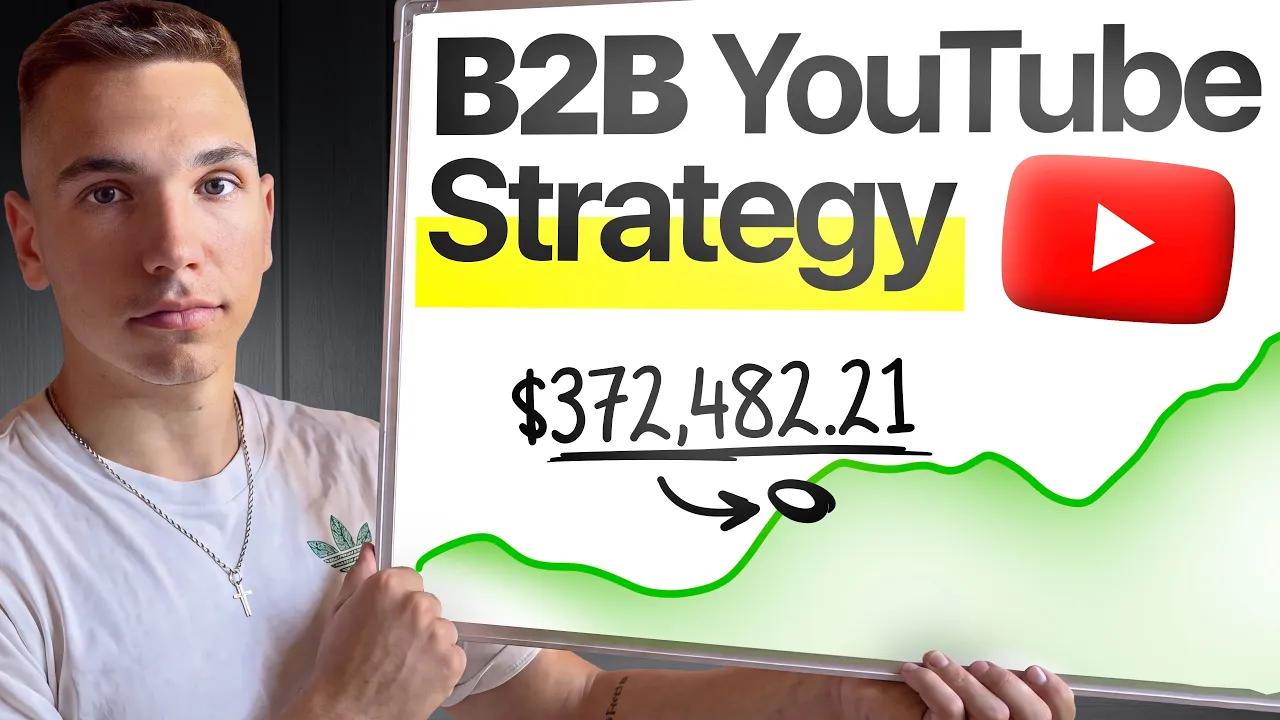
Two to six weeks if you already have an audience on LinkedIn, X, or email. Point your existing followers at the videos and you’ll see booked calls quickly. Those people already trust you and just need a reason to engage deeper.
Two to four months if you’re starting a B2B YouTube channel from scratch. You need time for YouTube’s algorithm to learn who your audience is and for search traffic to find your videos. Consistency matters here. Weekly uploads are non-negotiable.
Six to twelve months to see compounding. This is when older videos start generating leads on their own without any promotion. Your channel becomes a genuine lead generation engine that works while you sleep.
The one case where it doesn’t work is the few-thousand-person ICP from earlier. The videos still help in sales conversations, but weekly inbound leads need more searchers than that.
The best-performing channels commit to YouTube for the long haul. Early wins can show up in weeks, but the compounding over 12 to 36 months is what makes the payoff serious.
What “Working” Looks Like for the Three B2B Channels (and Their Numbers)
Channel | Starting point | Result | Timeframe |
|---|---|---|---|
Taylor Haren (Sales Automation Systems) | New channel, existing LinkedIn audience, three failed agencies before | $28,000 in pipeline in 28 days, then 5 to 10 booked calls a week | 28 days, then 5 months |
Adam Robinson (RB2B) | 100 to 300 views per video | Some videos over 40k views, 100+ signups | 5 months |
Sam Dunning (Breaking B2B) | 2.3K subscribers | $66,000 in added revenue ($5.5K/month deal, 12-month contract) | Ongoing |
Taylor Haren came to us after spending $25,000 on three YouTube agencies. The scripts came from LinkedIn content he’d already written, the first upload did ten times the views of his old videos, and the channel generated $28,000 in pipeline in its first 28 days. Five months in, it books 5 to 10 calls a week and fuels his other content.
Adam Robinson went from 100 to 300 views per video to videos pulling over 40,000 views, with 100+ signups for RB2B in five months. The scripts were written from his existing LinkedIn posts and newsletter, so the ideas were already tested and the edits were minimal.
Sam Dunning’s $66,000 channel proves you don’t need a big subscriber count. A single $5,500-per-month deal on a 12-month contract came directly from YouTube with just 2.3K subscribers. In B2B, one deal from YouTube can pay for a full year of production.
The Four Objections, Answered
“We don’t have time.” Your founder or subject-matter expert records two to three hours a month. That’s it. A done-for-you YouTube agency handles strategy, scripting, editing, thumbnails, YouTube SEO, and distribution. You record, and someone else does the rest.
“Our niche is too small.” That’s why it works. A narrow ICP means less competition on YouTube for the topics your buyers search for. You need the right people watching, and in a niche market, those people are searching for exactly what you teach.
“It’s too expensive.” The math is the deal size against the retainer. Sam Dunning closed a $5,500-per-month, 12-month deal from a channel with 2,300 subscribers, and that one deal covers a year of production. For the full breakdown of agency, in-house, and freelancer costs, see our guide on how much B2B YouTube costs.
“Nobody wants to be on camera.” B2B buyers want to hear from someone who understands their problems, and a credible person on camera is what builds that trust. That’s often the founder, but a subject-matter expert on the team works, and so does a vetted freelance presenter. An AI avatar doesn’t, because viewers spot it and the trust never arrives.
How to Find Out if It Would Work for You
Not every B2B company is a fit for YouTube, and four questions settle it.
Your buyers search for answers. If people in your ICP type questions into YouTube or Google that your team could answer, there’s an audience waiting.
A founder or expert is willing to record. Someone at the company needs to be on camera, and two to three hours a month is the commitment.
You have an audience somewhere already. LinkedIn followers, an email list, or a podcast audience. Any channel you can point at YouTube shortens the timeline from months to weeks.
Your deal size pays back the investment. If your average deal is $10,000 or more, one or two deals a quarter from YouTube pays for the whole channel.
Three or four yeses and YouTube will almost certainly work for your business. Two or fewer and the budget is better spent elsewhere for now.
Book a free YouTube strategy call if you want a specific answer for your company. We’ll walk through your market, your ICP, and a realistic timeline.
Start With What Your Buyers Are Already Searching For
YouTube works for B2B SaaS and service businesses because it’s a search engine, and your buyers are already using it. The audience doesn’t need to be broad. You need the right people watching, someone credible willing to show up, and a consistent upload schedule.
The companies that get the best results start with a strategy built around what their buyers search for. Then they commit to weekly uploads for at least six months. Early results come faster than people expect, and the compounding over 12 to 36 months is where the payoff gets serious.
If you want to find out whether YouTube fits your business, book a free strategy call and we’ll give you a straight answer.
Frequently Asked Questions
Can YouTube Work Alongside Our Existing Marketing?
It doesn’t replace what you’re already doing, it builds on it. A prospect who watches three of your videos before a sales call already trusts your approach. Your team spends less time educating and more time closing.
Do Views Matter At All?
Views aren’t the primary metric, but they’re not meaningless either. More views mean more people in your ICP are finding your content, and that’s a good thing. The goal is qualified views from the right people, not raw view count. A video with 200 views that books three calls is a better result than a video with 10,000 views that books none.
Does This Work for a SaaS With a Tiny Market?
For B2B SaaS and service businesses, nearly always. The exception is an ICP of only a few thousand people worldwide, because YouTube needs enough searchers to deliver consistent organic traffic. Even in a niche market, if your buyers search for solutions on YouTube, the channel can work. Pair it with LinkedIn and email to drive early traction.